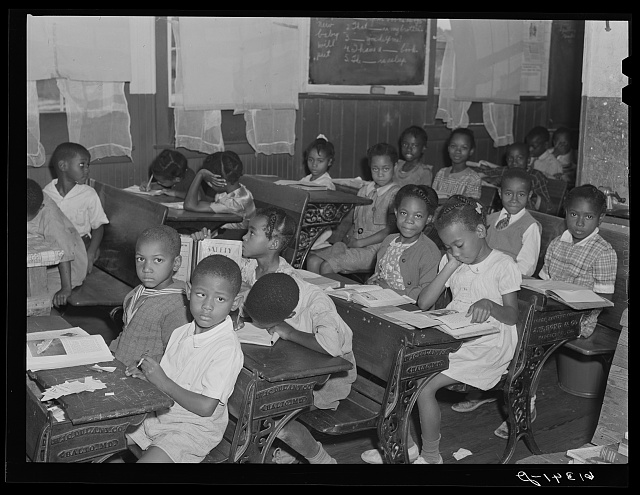

Schoolhouses have long been a defining feature of education in the United States. From modest one-room buildings to more structured early 20th-century schools, these spaces reveal how learning, discipline, and community life were shaped over time. More than simple buildings, schoolhouses reflect changing ideas about who education was for, how it should be delivered, and what role schools played in shaping citizens.
This post looks at the history of American schoolhouses through their physical spaces, social function, and visual record—using photographs to understand how education was experienced on the ground.

The One-Room Schoolhouse and Early Public Education
For much of the 19th and early 20th centuries, the one-room schoolhouse was the most common form of education in rural America. These buildings served entire communities, bringing together children of different ages under one teacher. Instruction was practical and repetitive, often shaped by seasonal labor demands rather than fixed academic calendars.

Inside, the space was sparse: wooden desks, chalkboards, and a central stove for heat. The layout emphasized order and visibility, reinforcing authority and discipline as core elements of learning. Education was not standardized, but it was deeply local—funded, built, and maintained by the surrounding community.

Schoolhouses as Community Centers
Beyond education, schoolhouses functioned as community hubs. They hosted town meetings, elections, religious gatherings, and social events. In many rural areas, the schoolhouse was the only public building available, making it a shared space for civic life.
Photographs of schoolhouses often show their isolation within the landscape, highlighting how education was woven into everyday life rather than separated from it. These images remind us that schooling was as much about social organization as academic instruction.
Unequal Access to Education
While schoolhouses symbolized opportunity, access to education was never equal. Race, geography, gender, and class shaped who could attend school and under what conditions.
- Segregated schools for Black children were routinely underfunded and overcrowded.
- Native American boarding schools used education as a tool of cultural erasure and forced assimilation.
- Girls were educated in growing numbers, but often steered toward domestic or moral instruction.
- Teachers, particularly women, were underpaid and held to strict behavioral expectations.
Schoolhouses made these inequalities visible. Differences in building quality, location, and resources reflected broader social hierarchies embedded in American life.

The Transition to Larger, Standardized Schools
By the early 20th century, many communities began moving away from one-room schoolhouses toward larger, centralized schools. Buildings constructed in the early 1900s—such as those built around 1905—often featured multiple classrooms, age-based grades, and more formal curricula.
This shift reflected changing ideas about efficiency, progress, and national identity. Education became more standardized, regulated, and professionalized, marking a transition from localized schooling to a broader public system.
Photographs from this period show a clear visual change: more permanent architecture, increased enrollment, and greater emphasis on structure and order.

Why Schoolhouse Images Matter
Historical photographs of schoolhouses offer more than nostalgia. They reveal:
- How authority was organized in physical space
- How children were expected to behave and learn
- How communities invested—or failed to invest—in education
Details like seating arrangements, classroom size, and building materials help us understand education as a lived experience shaped by power, economics, and cultural values.
Looking at Schoolhouses Today
Preserved schoolhouses and archival images allow us to reflect on the foundations of modern education. They prompt important questions:
- Who was included in early systems of learning?
- How did schools reinforce social norms?
- What assumptions about education still persist today?
Schoolhouses are reminders that education has always been shaped by the society around it—and that learning spaces are never neutral.Schoolhouses, whether built in the 19th century or the early 1900s, tell a story of ambition, inequality, discipline, and community. Through their architecture and use, they reveal how education functioned as both opportunity and control. Examining these spaces through historical images helps us better understand the roots of American schooling and the values it was designed to uphold.
